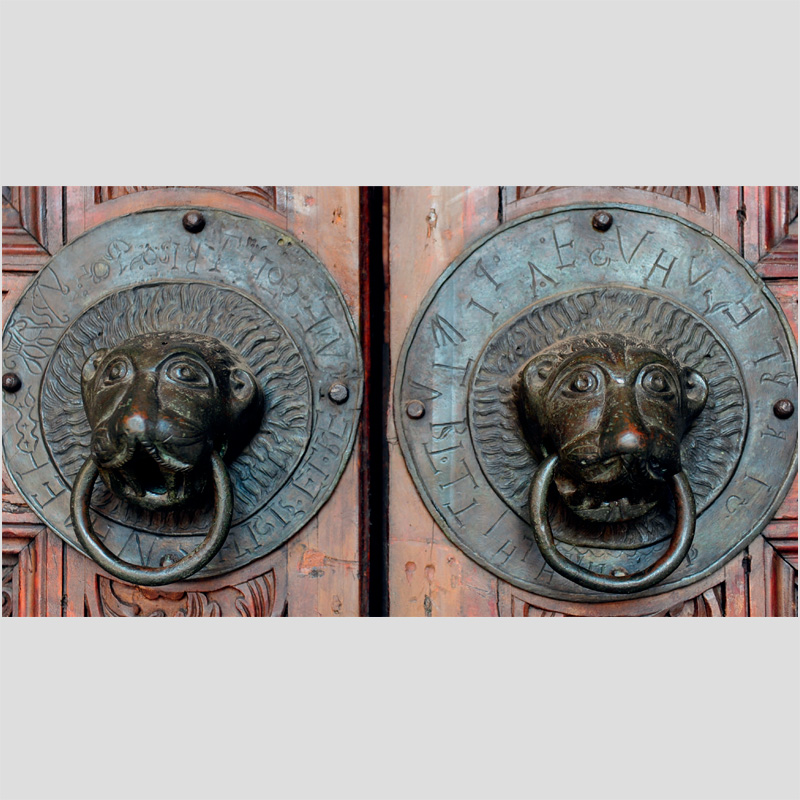
The chemical analysis of metallic artifacts within the field of cultural heritage studies plays a crucial role in providing valuable information about the production and manufacture of such works, which can help determine their temporal and/or geographical origin, thus contributing to discussions by historians and art historians. Given the nature of these objects, such analyses must adhere to a set of parameters aimed at preventing alterations or damage, including the use of non-destructive techniques or, as in this case, non-invasive techniques (without direct contact with the artifact).
Currently, one of the most effective analytical techniques for obtaining chemical composition information of metallic objects in a non-invasive manner is X-ray fluorescence (XRF). This technique is based on a physical principle whereby a material, irradiated with low-power X-rays, emits characteristic X-rays for each chemical element present. In this way, both qualitative and quantitative data on the composition of the chemical elements can be obtained.
Thus, it is an elemental investigation that gathers information about the atoms (and their quantities) that make up the material, without, however, providing data on the molecular structure of the compounds present.