Contenuto in: 

Fra Angelico and indirect narration: the dream of Innocent III

€ 6,00

Categoria:
Autori:

Sommario

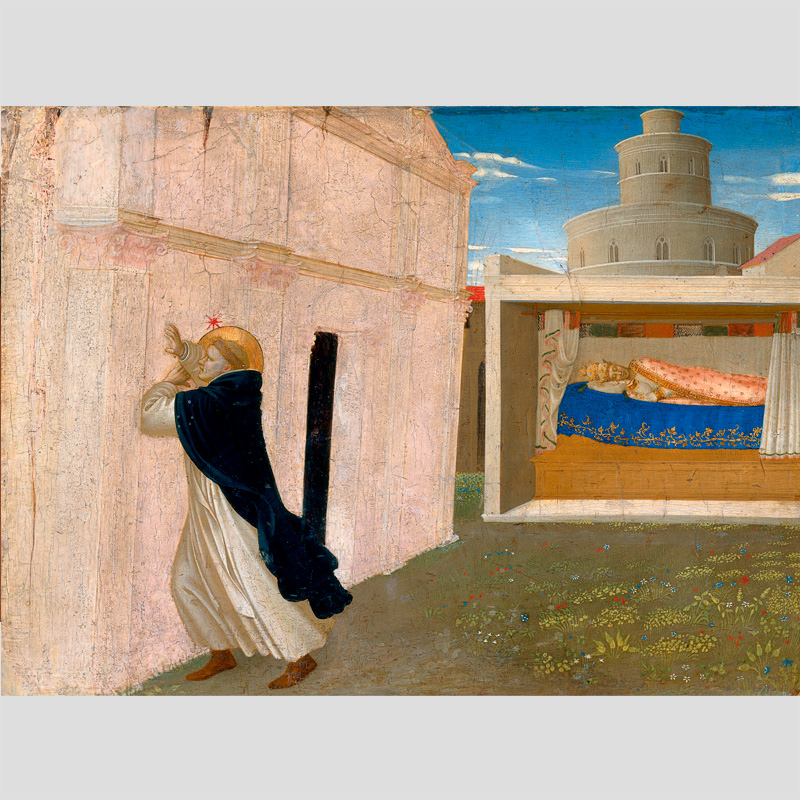
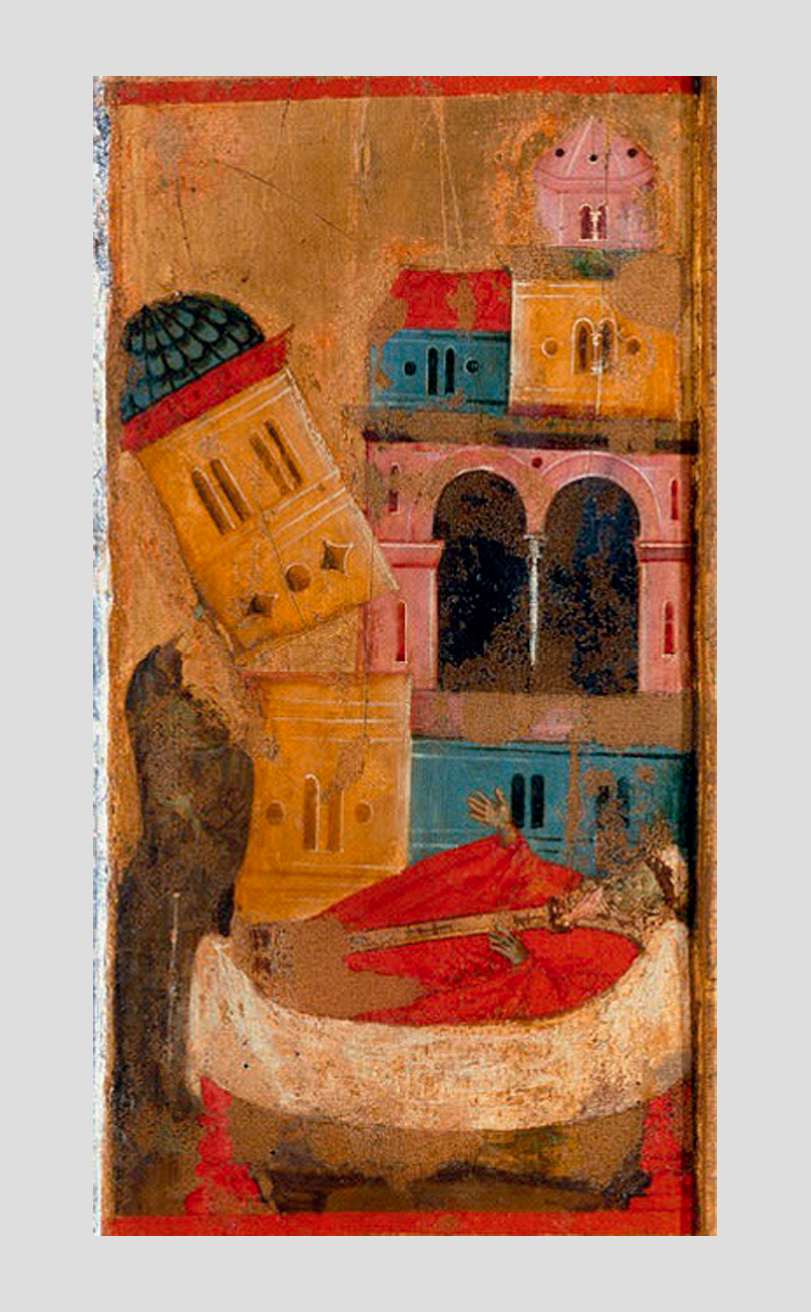
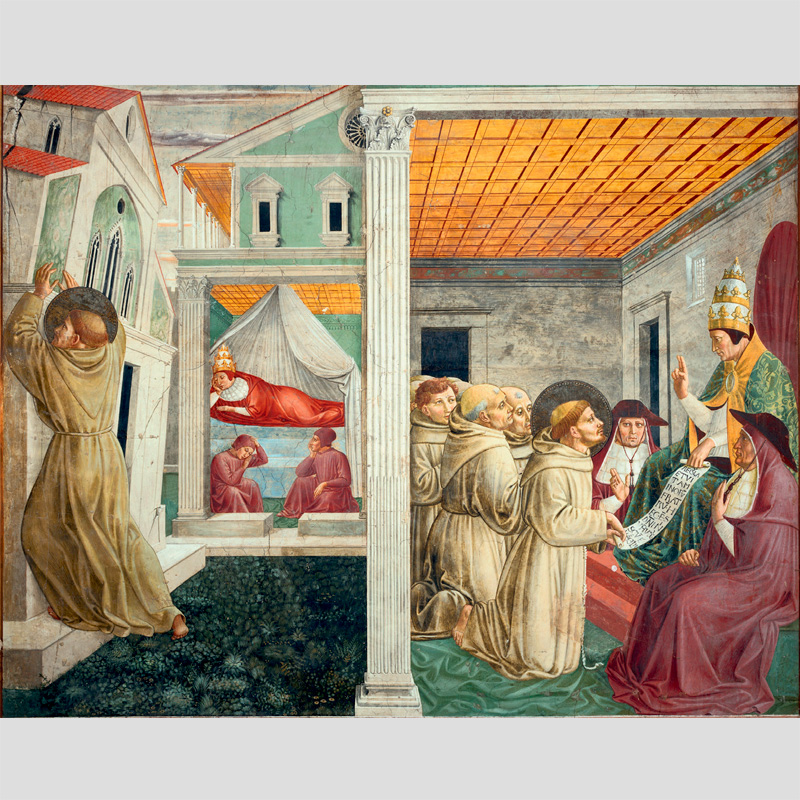
Il Sogno di Innocenzo III può appartenere sia alla storia di San Francesco che a quella di San Domenico, ma quando Fra Angelico affrontò il soggetto, si concentrò su quest’ultimo, in particolare nella predella sottostante la Coronazione della Vergine, attualmente al Louvre. Come nelle interpretazioni precedenti di questo tema, la rappresentazione di Angelico ha due componenti fondamentali: il sognatore (Papa Innocenzo III) e il contenuto del sogno (San Domenico che sorregge la chiesa in rovina). L’artista combina queste componenti in un modo senza precedenti. I progressi spaziali del XV secolo – in particolare l’avvento della prospettiva a un punto – resero possibile rappresentare il mondo visivo in modo più vivido, con un maggiore grado di naturalismo. Tuttavia, man mano che il naturalismo diventa più centrale, la rappresentazione dei sogni o delle visioni diventa più problematica; la semplice giustapposizione del visibile e dell’invisibile, del reale e dell’immaginario, non è più sostenibile come prima. Tuttavia, Angelico riesce a trovare un equilibrio interessante. Nella sua interpretazione, il nuovo naturalismo esalta l’invisibile, che a sua volta è pienamente integrato nell’immagine nel suo insieme. Vediamo il sognatore attraverso il sogno, tutto nel contesto di un’unica scena, in modo più convincente rispetto alle versioni precedenti del soggetto, risalenti al XIII secolo.

Summary

The Dream of Innocent III can belong either to the story of St. Francis or St. Dominic, but when Fra Angelico tackled the subject, he concentrated on the latter, most notably in the predella beneath the Coronation of the Virgin, which is now in the Louvre. As in earlier interpretations of this theme, Angelico’s depiction has two basic components: the dreamer (Pope Innocent III) and the content of the dream (St. Dominic supporting the crumbling church). The artist combines these components in an unprecedented way. The spatial advances of the fifteenth century – especially the advent of one-point perspective – made it possible to represent the visual world in a more vivid way, with a greater degree of naturalism. However, as naturalism becomes more of an issue, the representation of dreams or visions becomes more problematic; the simple juxtaposition of the visible and the invisible, the real and the imaginary, is no longer as tenable as before. Angelico, however, strikes an interesting balance. In his interpretation, the new naturalism enhances the invisible, which in turn is fully integrated into the image as a whole. We see the dreamer through the dream, all in the context of a single scene, more convincingly than in prior versions of the subject, going back to the thirteenth century.

Pubblicazioni collegate